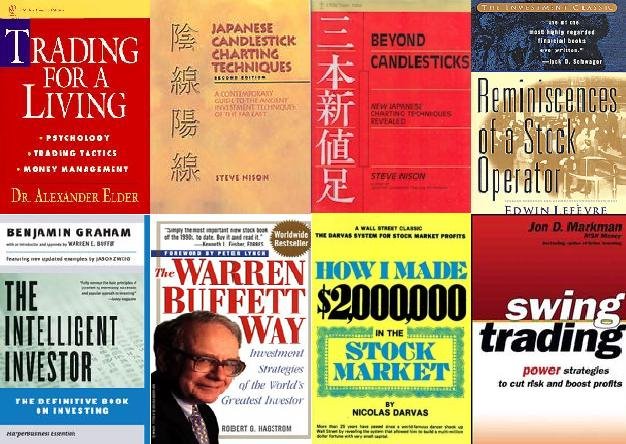
OK, so finally I decided to blog about my picks. :P
Yeah, slightly overdue but oh well...
Enjoy and don't forget to read my disclaimers.
I ll post the disclaimer all around Fusion Pick when I find the time.


The past three global recessions were all triggered by high oil prices due to oil supply disruptions: the OPEC oil embargo in 1973-74; the Iranian revolution in 1979; and
These have led me to believe that a commodities super cycle is underway. A super cycle is a prolonged (decade or more) trend rise in real commodity prices, driven by urbanization and industrialisation of a major economy (according to Citigroup’s Report:

According to the IMF World Economic Outlook, September 2006, China accounted for at least half of the increased demand for industrial metals - Zinc (113%), Lead (110%), Nickel (87%), Tin (86%), Steel (54%), Copper (51%), Aluminium (48%) - between 2002 and 2005. In 2004,

Jim Rogers, the best known advocate of HOT commodities, laid out that a secular bull market in commodities is underway, in as early as 2004, when his HOT Commodities was published in 2004. He observes that the 20th century has seen three secular bull markets in commodities (1906-1923, 1933-1955, and 1968-1982). Each of those secular bull markets has lasted a little more than 17 years. If his view holds, we are currently in the middle of yet another secular bull market in commodities that began in 1999.
So, will the boom continue as the world economy slows? US, being the largest importer of
| Table 1: Selected Commodities Price Increase | ||
| change since January 1999 (%) | | |
| | Nominal | Real |
| Nickel | 1,093 | 856 |
| Uranium | 954 | 745 |
| Crude oil | 436 | 329 |
| Copper | 338 | 251 |
| Lead | 281 | 206 |
| Rubber | 239 | 172 |
| Zinc | 239 | 171 |
| Tin | 162 | 110 |
| Gold | 125 | 89 |
| Aluminium | 121 | 77 |
| Corn | 75 | 41 |
| Hard logs | 66 | 33 |
| Wheat | 59 | 27 |
| Soybeans | 41 | 13 |
| Soyoil | 41 | 13 |
| Coffee beans | 26 | 2 |
| Cotton | 4 | -16 |
| Palm oil | -2 | -22 |
| Sugar | -6 | -25 |
Perhaps it’s good to draw some inference from the historical prices of commodities – gold, tin, lead, copper, cotton, hard logs, crude oil, uranium, zinc, aluminium, nickel, soybeans, soyoil, corn, wheat, palm oil, rubber, sugar and coffee beans – in real (adjusted for inflation) and current prices. From January 1999 to Mar 2007, nickel increased the most, by a stunning 1093%, uranium 954% and crude oil 436% in nominal terms (see table 1).

Although we have always thought that copper is very expensive, it has only risen by 338% over the same period and a 251% increase in real prices. Interestingly, the figures suggest why Jim Rogers are so bullish on agricultural commodities. After adjusting for inflation, they are ranked at the bottom of the table, showing the least increase or decline (cotton, palm oil and sugar) in the past few years. Palm oil looks really cheap, down 2% from 1999’s level at current prices and 22% in real terms. Figure 2 suggests palm oil should go up to USD1,600 to surpass its previous high recorded in May 1984. At current price of RM2,300 (USD673) per tonne, it is 55-60% off from the previous high or equivalent to 1.3 times of its current price.
Another important thing to note is that copper, nickel, zinc and uranium are at or close to their historic highs. One common characteristic among them is that they are in tight supply despite rising prices (but the world sees IPOs everyday). In the mining industry, it takes years of exploration before one can bring the metals out of the ground and most mining companies are not willing to spend hugely in an investment that might not result in any tangible output for at least a decade. The same goes for other commodities. For example, it takes 5 years for a coffee tree to mature. It is still very much a fundamental play in commodities markets. Some commodities are not cheap but some are. Commodities do not move in tandem. Each commodity has its own supply-demand equation, though some may be directly correlated with other commodities, e.g. a palm oil might be related to soybeans, soyoil, ethanol and crude oil. One needs to study the fundamentals driving the supply and demand of a commodity before investing in commodities.


People who tries to find security are actually selling their freedom down the tube. Because the people that found this country, who fought the revolutionary war did not fight for job security. They fought for the right to be free. And freedom is a very, very high state...
How in the world can you say you have freedom when somebody tells you when you can eat lunch? How in the world can you say you have freedom when somebody tells you when you go to work and when you get off work? How in the world can you say you have freedom when somebody tells you when somebody have the right to fire you because they need to downsize?
when somebody has the right to tell you how much you can make? That is not what we fought for. Too many people has sold their freedom...